Having spent the semester asessing my view of the design world and developing my personal design theories, I can see that there is no way to encapsulate my thoughts and feelings on design in only one paper. Above all else, design is an element of change, the rhetoric we use and the concepts we create are extensions of our need to communicate and change the world around us.
In the last 49 blog entries I have come to understand the value of challenging others to think critically about the world they live in. Whether my designs accomplish this fact, I dont know, but having seen examples of how designers can incite change in the world, I hope that I can rise to the challenge.
Showing posts with label inspiration. Show all posts
Showing posts with label inspiration. Show all posts
4/21/08


Design Power
 I think that theres an enormous opportunity for designers and design educators to promote social change. Creative for a cause is an organization that promotes social responsibility in design. There are a ton of links to 'role models' and case studies- people and design firms who are using their power to make change.
I think people are fundamentally decent, but I don't feel that we are naturally compatible with one another. With modern technology moving forward at such a pace, the ethics of interaction are not keeping up.
Living in a city as multicultural as Toronto has give me a strong sense of how people perceive one another through filters, only seeing what they perceive to be negative qualities. I am a strong supporter of what the Dalai Lama calls 'a need for a Secular System of Ethics' that is non-theistic in nature.
So, As a designer I hope to promote decency and respect between people and a shift from seeing the world from the inside out to seeing it from the outside in. Change can only occur within, thus we should use our considerable communication skills to share what we know and provoke others to do the same.
Creative Education
Creativity
I had an unusual childhood. Well, unusual by todays standards anyways. Both of my parents are still married, and my three siblings are happy and (relatively) well adjusted. To say we were difficult kids to manage would be a grand understatement, all four of us had some degree of attention deficit disorder. Think of a wild pack of savages, put them in white collar suburbia, and you'd have a reasonably accurate idea of how we behaved.
Needles to say, many of my talents were overshadowed by my inability to perform academically, and few teachers were able to identify what it was that I DID do well. I was a comic book junkie ever since I was a kid, probably collecting and trading cards was an outlet for my social nature and my appreciation of good art(many of my trades were not strategic but aesthetic).
It wasn't until high school that I started to see myself as creative. Almo, my bro from back home, spent all of his time inventing comic book series that never went anywhere. So we developed an endless cast of characters as our creative outlet. While my skills as an illustrator are beginning to fade due to a preference for digital art, my skills were definitely developed through the amount of drawing and conceptualization I did in high school.
Education
My experience as a designer is actually relatively short. I never focused on communications in high school partly because the school I studied in was poorly funded and archaic. My perception of design was linked to advertising which was unfortunately a negative connotation because no-one ever bothered to dispel the perception that all advertising is evil. Maybe chalk it up to bad career counseling or a lack of awareness of the booming advertising industry of design.
Rather than risk wasting a degree in fine arts, I decided to pursue Youth and Addictions Counselling as I have always been a calm, trustworthy and social person. I felt that if I could make a difference in someones life that I would be able to enjoy my job. Upon moving into Toronto to study at George Brown, I discovered that the program I chose was not an appropriate fit, but fortunately I met a student studying graphic design while I was there.
That was when realized that if I wanted to combine my skill with words and people with my passion for art, I would be able to do so as a designer because of the collaborative nature of Graphic Design.
I had an unusual childhood. Well, unusual by todays standards anyways. Both of my parents are still married, and my three siblings are happy and (relatively) well adjusted. To say we were difficult kids to manage would be a grand understatement, all four of us had some degree of attention deficit disorder. Think of a wild pack of savages, put them in white collar suburbia, and you'd have a reasonably accurate idea of how we behaved.
Needles to say, many of my talents were overshadowed by my inability to perform academically, and few teachers were able to identify what it was that I DID do well. I was a comic book junkie ever since I was a kid, probably collecting and trading cards was an outlet for my social nature and my appreciation of good art(many of my trades were not strategic but aesthetic).
It wasn't until high school that I started to see myself as creative. Almo, my bro from back home, spent all of his time inventing comic book series that never went anywhere. So we developed an endless cast of characters as our creative outlet. While my skills as an illustrator are beginning to fade due to a preference for digital art, my skills were definitely developed through the amount of drawing and conceptualization I did in high school.
Education
My experience as a designer is actually relatively short. I never focused on communications in high school partly because the school I studied in was poorly funded and archaic. My perception of design was linked to advertising which was unfortunately a negative connotation because no-one ever bothered to dispel the perception that all advertising is evil. Maybe chalk it up to bad career counseling or a lack of awareness of the booming advertising industry of design.
Rather than risk wasting a degree in fine arts, I decided to pursue Youth and Addictions Counselling as I have always been a calm, trustworthy and social person. I felt that if I could make a difference in someones life that I would be able to enjoy my job. Upon moving into Toronto to study at George Brown, I discovered that the program I chose was not an appropriate fit, but fortunately I met a student studying graphic design while I was there.
That was when realized that if I wanted to combine my skill with words and people with my passion for art, I would be able to do so as a designer because of the collaborative nature of Graphic Design.
A Manifesto
As a design student my process is still relatively ill-defined, as such this manifesto represents the ideal circumstances in which I am able to produce my best work.
Follow YOUR Path to the End- While many stress the importance of process, no one can tell you the ideal way to create, that comes from within. The sooner you can find your own path, the better you will be able to express your concepts.
Seek Inspiration from Outside of Design- The best designs are the embodiment of an idea. Taking inspiration from an existing design means either boiling it down to the concept or struggling to mimic something you cannot fully understand.
Stand Back- Don't get too involved in your work, get an outside opinion, take a break and return with a fresh perspective, or just work on something else. You'll never work through your problems if you cant put them in perspective
Take Good Care of Yourself- Nutrition and rest are essential to the creative process. Sound design choices are made with a clear and open mind, and nothing dulls the decision making process like an all-nighter.
Seek Constructive Criticism- While critique is always invaluable, so much depends on your ability to communicate your ideas and get reactive feedback. Always explain your design choices as best you can or the feedback you receive will be based on perception rather than understanding. Never take criticism seriously if it is based on personal opinion or experience, there is no such thing as a universal rule.
Never Let Yourself be Satisfied- Being satisfied with an unfinished job implies that the concept has not lived up to it's full potential.
Learn from the People Around You- The best teachers are strangers and friends alike. Learn new lessons in a real context so that you can better apply the knowledge you gain.
Make Time for Experimentation- Always enter a project with an open mind and figure out what works best, otherwise you may find yourself stuck in a dead end.
Follow YOUR Path to the End- While many stress the importance of process, no one can tell you the ideal way to create, that comes from within. The sooner you can find your own path, the better you will be able to express your concepts.
Seek Inspiration from Outside of Design- The best designs are the embodiment of an idea. Taking inspiration from an existing design means either boiling it down to the concept or struggling to mimic something you cannot fully understand.
Stand Back- Don't get too involved in your work, get an outside opinion, take a break and return with a fresh perspective, or just work on something else. You'll never work through your problems if you cant put them in perspective
Take Good Care of Yourself- Nutrition and rest are essential to the creative process. Sound design choices are made with a clear and open mind, and nothing dulls the decision making process like an all-nighter.
Seek Constructive Criticism- While critique is always invaluable, so much depends on your ability to communicate your ideas and get reactive feedback. Always explain your design choices as best you can or the feedback you receive will be based on perception rather than understanding. Never take criticism seriously if it is based on personal opinion or experience, there is no such thing as a universal rule.
Never Let Yourself be Satisfied- Being satisfied with an unfinished job implies that the concept has not lived up to it's full potential.
Learn from the People Around You- The best teachers are strangers and friends alike. Learn new lessons in a real context so that you can better apply the knowledge you gain.
Make Time for Experimentation- Always enter a project with an open mind and figure out what works best, otherwise you may find yourself stuck in a dead end.
4/14/08
Fill the well
I dont know if anyone else is feeling creatively sapped from their studies, but if so check out Fuel Your Creativity to fill the well.


Challenging the Standard Format of Modern Communication
Yes! This is exactly it! Check out these remarkable information design pieces. As I have been working on my own theories of design in my college studies, I cant help but recognize an excellent example of how design can remove the 'visio-rhetorical subtext' from something as commonplace as the news.
While I was drifting in the blogosphere I happened to stumble upon university student David Bowker's website, Designing the News. He has taken the text of various newspapers, dissected them, and reinterpereted them as the visual content of his designs.
I think this is a innovative way of thinking about distributing information. He has interpreted the text of one full week of the guardian and based a series of visuals and information graphics. I think this piece is an excellent example of how challenging the standard format of modern communication can produce such provocative and inspired designs.

While I was drifting in the blogosphere I happened to stumble upon university student David Bowker's website, Designing the News. He has taken the
 text of various newspapers, dissected them, and reinterpereted them as the visual content of his designs.
I think this is a innovative way of thinking about distributing information. He has interpreted the text of one full week of the guardian and based a series of visuals and information graphics. I think this piece is an excellent example of how challenging the standard format of modern communication can produce such provocative and inspired designs.

4/1/08
The Mad Magazine Fold-in
This ones for Craig.
I remember being mystified by the mad fold-ins as a kid. since before I was old enough to fully grasp some of the political nuances of the comedy, I was delighted by the mystery of what may appear once the page was folded. Little did I know the rarity of this art form, apparently the same artist has been drawing them since the 1960's, Al Jaffee.


I found this interactive fold in showcasing his work on design observer. I was impressed not only by his work, but by the ability of modern technology to represent his work in such a remarkable way. After all, theres no more appropriate way to represent what could be considered one of the the earliest forms of interactive design, than by using it's modern counterpart. Check it out.
I remember being mystified by the mad fold-ins as a kid. since before I was old enough to fully grasp some of the political nuances of the comedy, I was delighted by the mystery of what may appear once the page was folded. Little did I know the rarity of this art form, apparently the same artist has been drawing them since the 1960's, Al Jaffee.


I found this interactive fold in showcasing his work on design observer. I was impressed not only by his work, but by the ability of modern technology to represent his work in such a remarkable way. After all, theres no more appropriate way to represent what could be considered one of the the earliest forms of interactive design, than by using it's modern counterpart. Check it out.
3/21/08
A list of things I have learned thus far
Stephan Sagmeister is a designer and artist who has taken what he has learned through experience and expressed it through an assortment of large scale installation art pieces. He revisited the list from which the pieces were created at the 2007 TED conference which you can watch here.

In response to the list of things Stephan Sagmeister has learned so far, I too have boiled down what I now know into a short list of knowable truths.
I cannot control how my words, actions, or designs are interpreted.
I am responsible for my failings and successes.
karma will be repaid, for better or worse.
A mistake is often forgivable, taking for granted that it will be forgiven, is not.
Loving some(one/thing) is meaningless unless you express it.
When you love and respect yourself, others will too.
Stupidity ends with education, ignorance with love, and arrogance with defeat.
Losing control of my temper brings out the ugly side of the people around me.
My creativity is dependent on nourishment and rest.
I will never be completely satisfied by the quality of my own work.
While I cannot say that I look back favorably on the circumstances in which these lessons were learned, their value to me is incalculable nonetheless.

In response to the list of things Stephan Sagmeister has learned so far, I too have boiled down what I now know into a short list of knowable truths.
I cannot control how my words, actions, or designs are interpreted.
I am responsible for my failings and successes.
karma will be repaid, for better or worse.
A mistake is often forgivable, taking for granted that it will be forgiven, is not.
Loving some(one/thing) is meaningless unless you express it.
When you love and respect yourself, others will too.
Stupidity ends with education, ignorance with love, and arrogance with defeat.
Losing control of my temper brings out the ugly side of the people around me.
My creativity is dependent on nourishment and rest.
I will never be completely satisfied by the quality of my own work.
While I cannot say that I look back favorably on the circumstances in which these lessons were learned, their value to me is incalculable nonetheless.
Alternate Perspectives
I recently found some work while meandering through the blogosphere that runs somewhat parrallel to the "Design is..." question that I have been engaged in answering.

The above piece is an excellent example of the painful search for what design means to us as designers. It is directly reflective of my personal attempt to narrow down all of the possible answers as to what design really is.


I found these and a variety of other examples of excellent type thinking and design here.
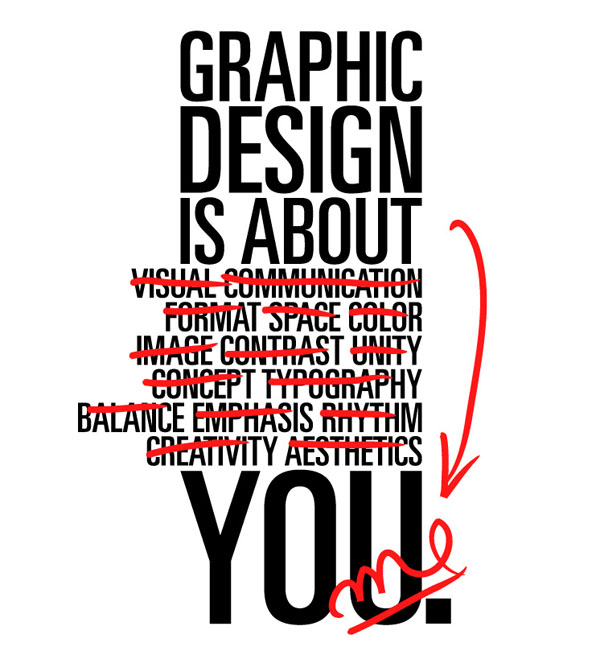
The above piece is an excellent example of the painful search for what design means to us as designers. It is directly reflective of my personal attempt to narrow down all of the possible answers as to what design really is.
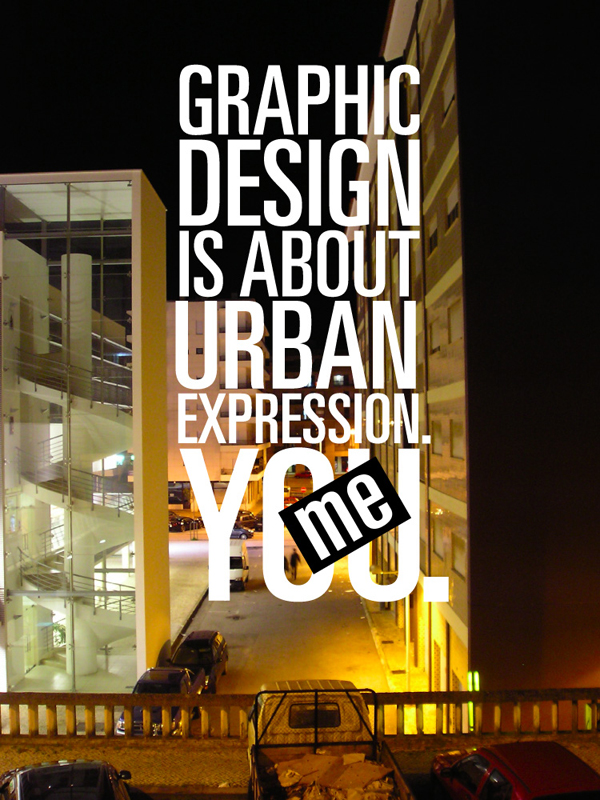

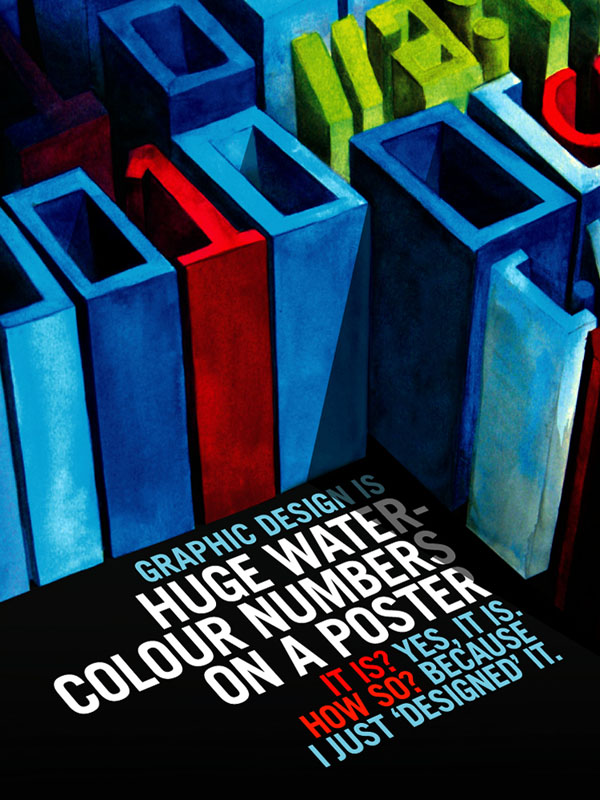
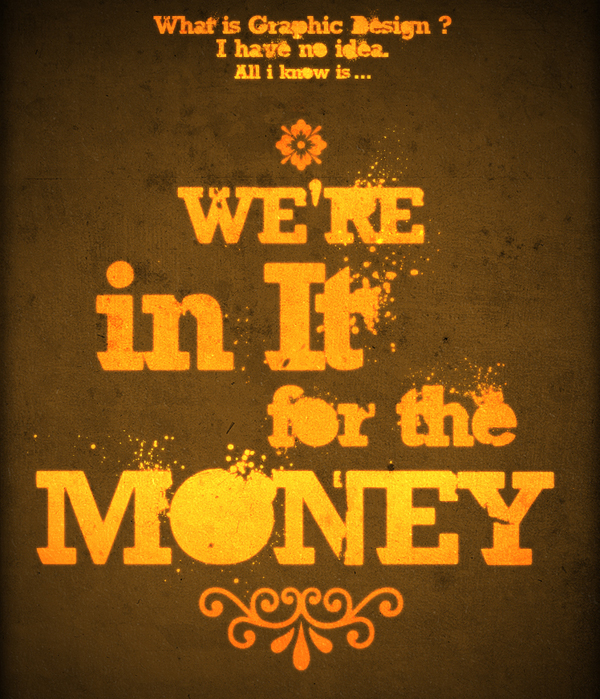
I found these and a variety of other examples of excellent type thinking and design here.
3/2/08
10 things that make me happy
In this playful exercise I have been asked to summarize the things that make me happy. I suppose as a designer, the closer I can get to understanding what makes me happy, the better equipped I will be to make others feel the same.
10 things that make me happy:
1. Walking my dog after a snow storm
2. Admiring a finished design
3. the (rare) courtesy of others
4. Mike Patton
5. Science fiction and forward thinking
6. a peaceful, quiet, and uninterrupted chance to develop a concept
7. Down time for personal development (of which I have none)
8. Reacquainting myself with old friends
9. A full bodied red with a smooth yet slightly spicy finish
10. The love of a truly passionate and driven woman
Subscribe to:
Posts (Atom)